

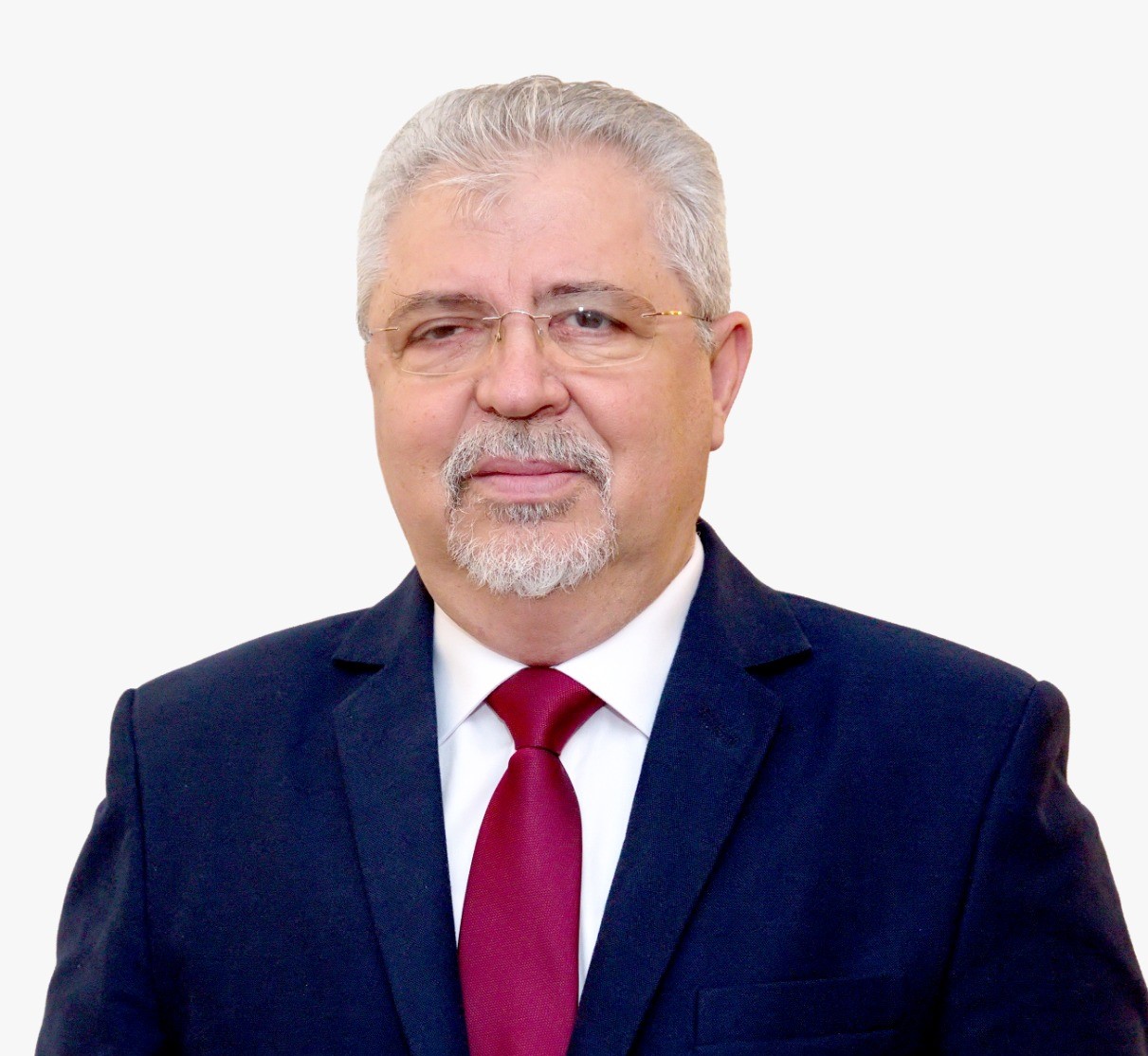
Mr. Mayor Ion Doldurea: „Caracal is a noble settlement, an aristocratic city with blue blood, a cultural city with history.”
CARACAL MUNICIPALITY
Mr. Ion Doldurea Mayor of Caracal Municipality
Phone: + 40-249/511384
+ 40-249/511205
Email: office@primariacaracal.ro
ion.doldurea@primariacaracal.ro
Professional experience
2010 – present – Mayor of Caracal Municipality
1993 – 2018 – Administrator and shareholder in his own private companies, Caracal
1990 – 1993 – Commercial Director of the Caracal Tire Company
1987–1990 – Specialist Inspector (in chemistry) at the Caracal State Inspectorate for Product Quality Control
1980–1987 – Technologist, Workshop Manager, Department Manager at the Caracal Tire Factory
Education
1975–1979 – Graduate of the Polytechnic Institute of Bucharest, Faculty of Chemical Technology
1970–1974 – Graduate of High School No. 2 in Caracal
1962–1970 – Graduate of General School No. 4 in Caracal
Caracal is a noble settlement, an aristocratic city with blue blood, a cultural city with history. I was born in Caracal, and my ancestors are also from here, peasants who work in agriculture. Caracal has taught us a lot, and I want to offer young people support and confidence for the future.
The municipality of Caracal is in southern Romania, in the Romanați Plain, at 44º7′ north latitude and 24º21′ east longitude. From east to west, it is crossed by the Gologan River, whose waters are channeled underground within the town. Caracal is part of Olt County.
The administrative territory of the municipality of Caracal covers an area of 7,472 ha and has a population of approximately 35,000 inhabitants.
BRIEF HISTORY
The fertile land of Romanați is full of vestiges that prove that this area has been inhabited since prehistoric times. The first page of the settlement’s history is written on flint and bears the patina of the Paleolithic, Neolithic, Bronze Age, and Iron Age. Nearby are the ruins of the Roman camp at Romula, as well as those of the Sucidava fortress.
Specialists have formulated two hypotheses regarding the name of the city. In 215 AD, after a campaign against the Goths, Roman Emperor Antonius Caracalla granted land to some veterans, founding the settlement that bears his name. Kara-Kale, which translates as Black Fortress or Black Tower, is the name given to the locality by the Cumans in the 9th-10th centuries. Even today, there are villages in the area called Comanca, Comani, and Comănița, which attest to the existence of these migrants.
2
The first documentary attestation is found in a document dated November 17, 1538, issued by the Chancellery of Radu-Vodă Paisie, through which the voivode gifted Radu vel Culcer, for his loyal service, several estates purchased from young lady Marga of Caracal.
The city was the royal court for Mihai Viteazul, Matei Basarab, Grigore Ghica, and Constantin Brâncoveanu.
Mihai Viteazul had a court here from where he administered his 23 estates in the surrounding area and issued chancellery documents.
In the Middle Ages, the city was an important commercial center for the surrounding agricultural area, being the residence of Romanați County, mentioned as early as 1496.
On November 24, 1994, Caracal was declared a municipality, a moment that was engraved in the consciousness of its inhabitants as a unique historical event.
LOCAL ATTRACTIONS
Caracal is an ancient cradle of culture and civilization, where history has been equally preserved and protected.
The National Theater, whose foundation stone was laid on July 14, 1896, was built according to the plans of Austrian architect Franz Bileck. It is a symbolic building in the historic area of the city, which was built between 1896 and 1901.
Its eclectic style, with neo-baroque and neo-renaissance accents, places the building in the same European architectural tradition as the Romanian Athenaeum and the National Theatres in Iași, Bucharest, Cluj, and Timișoara, impressing with its massiveness and decorative richness, both exterior and interior (columns, capitals, balconies, domes, friezes).
The name of the building, National Theater, is inscribed on its frontispiece, and the two sides each have an epigraph, Comedy and Tragedy.
Due to the value of the theater collective, in 1976 it was given the name Popular Theater, and today it is called the Municipal Theater.
The great composer George Enescu performed several concerts in the theater hall, visiting Caracal for the first time in 1915. The show Monograph of Municipality 209, which Enescu performed here, accompanied by pianist Theodor Fuchs, was part of the tour the artist undertook to raise funds for the Romanian Athenaeum in Bucharest, „awakening even in the smallest towns of the country a taste for good music.” Also, great figures of literature, science, and art, such as Nicolae Iorga, Vasile Pârvan, A. D. Xenopol, Octavian Goga, or great politicians such as Tache Ionescu and Nicolae Titulescu, gave speeches and held conferences.
Over the years, prestigious theater companies have performed on its stage: Constantin Tănase’s company, the Bucharest National Theater, Nottara’s company, and the Bulandra-Manolescu drama company.
The National Theater hosts the following annual events: the National Theater Festival, the FesTin Youth Theater and Short Film Festival, the Amateur Theater Comedy Festival, the Municipal Theater’s permanent season, as well as various conferences and exhibitions.
Constantin Poroineanu Park is the most important landscape architecture landmark in Olt County and one of the most beautiful in the country. That is why it is also called the pearl of the city.
The park is in the western part of the city, near the administrative center, between two old and well-known neighborhoods, Bold and Potroseni.
The park was designed by French architects Edgar Redont and Ernest Pinard.
3
The land on which the city park stands today was a 35-hectare pond in 1893. Archival documents show that the pond was owned by landowner Constantin Poroineanu, who ceded it to the city council in 1893 because the municipality wanted to build a park in this part of the city. The park was developed by draining the pond and expropriating the surrounding land, with the development being completed in 1914.
In 1960, work began on the development of the sports facility in Caracal.
The interest shown by officials in this project from its inception to the present day has led to some changes, but without altering its original structure.
The park is home to a wide variety of plants. Among the most representative tree species are spruce, black pine, Douglas fir, swamp cypress, pagoda tree (Ginkobiloba), the tree of life, red cornel, wild apple, mahonia, ash, poplar, black poplar, chestnut, maple or garden palace, mountain plane, American maple, red willow, etc.
The Romanați Museum was founded on September 27, 1949, in the building that belonged to the Jianu family, in the house of Iancu N. Dobruneanu, the grandson of Iancu Jianu. The heritage consists of valuable items from donations, acquisitions, and archaeological research.
The idea of establishing a museum in our city emerged in the second half of the 19th century, when the Roman ruins at Romula became the focus of attention for some of the leading archaeologists of the time. Alexandru Odobescu’s work Antiquities of Romanați County, published in 1877, discussed the countless vestiges of the past discovered in Romanați County and defined „the ancient character of one of the most interesting counties in the country.” Many valuable pieces discovered in the county ended up in private collections, were lost, or were taken abroad. To save the historical treasures that were sometimes discovered by chance, it was necessary to establish a museum in Caracal. Archaeologists wanted to organize an archaeology museum here, which would include the numerous materials discovered both in Romula and throughout the county.
The Romanați Museum has three collections of objects and is structured into four sections: archaeology – history, memorial, fine arts, and ethnography.
– The archaeology and history section has some interesting stuff, some of it over 6,000 years old, displayed in eight rooms covering over 400 m2.
– The Iancu Jianu Memorial Section was established as a museum on September 30, 1958, in a massive building in the style of a boyar mansion, which belonged to Costache Jianu, the cupbearer and father of Iancu Jianu. The Iancu Jianu Memorial Section is housed in the haiduc’s parents’ house, built in the second half of the 18th century, and includes the Iancu Jianu house, outbuildings, and the hovel.
– The fine arts section was established at the beginning of the museum’s creation, because Caracal was the birthplace of talented painters such as Mihai Lipaty, Marius Bunescu, Ion Musceleanu, Gheorghe Teodorescu Romanați, Teodor Catană, and Sorin Chirimbu. The fine arts section also displays works by painters Ștefan Luchian and Gheorghe Petrașcu; icons, wood paintings from the 10th, 17th, and 19th centuries, tapestries, and sculptures by well-known sculptors V. Năstăsescu, R. Romanelli, and Ernest Dubois.
The Iancu Jianu Memorial House has a distinctive boyar-style design. The house was probably built by Costache Jianu, Iancu’s father, at the end of the 18th century, and consists of a ground floor, first floor, and basement. The monumental complex includes the house, its outbuildings, and the barn. Iancu Jianu, a prominent figure in the history of Caracal, spent part
4
of his life in this house. He came from a family of middle-ranking boyars whose members held various positions both in the royal court and in the local administration of the county.
Iancu was the youngest of the four children of cupbearer Costache Jianu. He was born in Caracal in 1787. A strong character, at the age of 23, Iancu Jianu became a haiduc and a fighter for the rights of the oppressed. It is said that he swore before priest Antonie Bazaclin-Zugravul at the Surpatele monastery (where Agapia Jianu, the Jienilor’s mother’s sister, was abbess) to fight to the death against the „Fanariot boyars” who oppressed the Romanian people.
He was an active participant, with the rank of captain, in Tudor Vladimirescu’s army in 1821. In 1823, he retired to his mansion on the outskirts of the village of Fălcoiu, passing away on December 14, 1842, at the age of 55.
He was buried in Caracal, and his tombstone is embedded in the wall of the Church of Assumption, built by the Jianu family.
The Virgil Carianopol Municipal Library has a collection of approximately 70,000 volumes, and the building belonged to the Bușulenga family.
The Ethnography Museum – Ion Hagiescu Miriște House is a heritage building in Caracal, one of the most representative buildings in the city, located on Bogdan Petriceicu Hașdeu Street.
The owner was the greatest art collector in Caracal and Romanați. He wanted to have a private collection available to the public, so he bought an almost ruined house from Teodor Cazan, which he rebuilt according to his plans, with the intention of turning it into a real museum. By 1905, he already had paintings in every room. In order to create a pleasant atmosphere around the museum, in 1906 he hired the renowned French landscape engineer Redont to design a 3,500 square meter park around the house.
Ion Hagiescu Miriște was a magistrate by profession, rising to the position of advisor to the Court of Appeal after serving as chief judge of the Romanați court in 1914.
The Marius Bunescu Art Gallery was founded on September 1, 1947, by members of the Haralamb G. Lecca Cultural Society. The gallery is located within the Ioniță Asan High School.
The collection of paintings was assembled either through acquisitions from society’s funds or through state or private donations. The art gallery bears the name of the painter Marius Bunescu, born in Caracal in 1881, and has over 300 works.
Noteworthy are the Japanese prints donated by Acad. Prof. Dr. Ștefan S. Nicolau and Marius Bunescu, the marble busts by Raffaelo Romanelli, representing Eufrosina and Constantin Poroineanu, the bronzes by Corneliu Medrea and Ion Jalea, and the paintings and drawings by painters Marius Bunescu, Dumitru Ghiață, Iosif Ieser, and Dumitru Catană.
The Radu Șerban Cultural Center carries out various cultural activities and organizes regular events that have a significant impact on the city’s residents, such as the Radu Șerban National Light Music Festival, the Virgil Carianopol National Poetry Festival, the Comedy Festival, and the Romanian Căluș.
The fire tower is a tall, circular tower with a surveillance platform. It was built in 1901 on the site of Mihai Viteazul’s royal court, near the city’s fire station, which was under the coordination of the city hall. From there, on the platform, the guard watched over the city
5
and sounded the alarm when he noticed a possible fire. The firefighting service operated until 1936, when all firefighting units were militarized.
Currently, the Fire Tower building is no longer in use, but is preserved as an architectural monument and a testimony to a certain stage of civilization of society. The Fire Department building no longer exists, and in its place stands the Multipurpose Hall and Mihai Viteazul Theoretical High School.
The Royal Church, dedicated to the Entry into the Church of the Mother of God, is „the oldest in the city of Caracal.” It was built on Protosenilor Hill, from stone blocks and bricks brought from the ruins of the Roman fortress Romula (located 6 km north of Caracal). As there is no inscription, the exact year of its construction is unknown. There are two hypotheses: that it was built between 1512 and 1521 by Prince Neagoe Basarab (who had a sister in Caracal, Lady Marga of the Craiovești family) and renovated by Mihai Viteazul at the end of the 16th century when he had his royal residence here, or that it was built by Mihai Viteazul, as established by archaeological research carried out by researchers Nicolae and Voica Puşcaşu from Iaşi in 1973 – 1974.
The Military Club was built between 1984 and 1985.
CITY EVENTS
Caracal is famous for the events that take place here every year. Festivals and cultural actions of very good quality.
Such is the case, for example, with The International Folklore Festival Romanian Căluș, one of the most important events held here. It takes place every year in the week of Pentecost. The aim of the event is to revitalize and promote the oldest folkloric manifestation with a spectacular character and to valorize the custom of the gag with its component elements: music, dance and theatre, to highlight the folk costume, as well as to develop international participation by inviting and promoting intangible values included in the UNESCO heritage.
Every year the festival opens with a parade of traditional costumes, bands and ensembles from the participating folk groups, and every year it is an outpouring of rhythms and colors, spectacular choreography, shouts and rapid spur beats, a veritable ethno-folklore recital, where the Oltenesque hore and Serbs are beautifully intertwined with the flight of the Montenegrin step, the graceful leap of the Transylvanian dance and the Moldovan tropotites. Every summer, on Whitsun Day, from all corners of the country, gag players from Oltenia, Muntenia, Banat, Transylvania, Moldova, representative folk ensembles from the country and abroad, united by the same sweet voice of brotherhood in customs, gather in the Romanian Plain, in Caracal, which has become the capital of Romanian gags for a few days.
The International Folklore Festival Romanian Căluș is a good opportunity to promote tourism in the Caracal area because it supports, capitalizes and promotes the oldest and most authentic folkloric manifestation, namely, the custom of the gag.
The International Folklore Festival Romanian Căluș, organized in partnership with the National Tourism Authority, will be included in the national and international cultural tourism circuit. This will encourage the circulation of cultural and artistic values, support national and international mobility and foster cultural dialogue between the groups of gag performers from the main folkloric areas, folklore ensembles, researchers and choreographers, as well as the countries participating in the festival with similar customs to the gag, promote folk costumes, traditional crafts and authentic products.
6
The Radu Șerban National Festival of Music is another attraction for Caracal, a festival which is a musical event, a celebration of Romanian light music, but also a launching pad for young talents.
The atmosphere in Caracal is remarkable, attracting not only young hopefuls from the world of culture and music, but also much older artists who come here, charmed by the extraordinary attitude of the public.
Another very popular event is the Spring Folklore Festival, a performance competition festival which aims to discover and promote vocal soloists and instrumentalists of popular music from children and young people, to discover and showcase authentic folk songs and dances, and to encourage stimulating and promoting young talent, arousing their interest in collecting folklore and learning the performing arts, promoting traditional instruments, learning the folk costumes of the area they represent and, last but not least, involving the festival laureates in other interregional, national and international folklore events.
Another important event is the FesTin Theatre and Short Film Festival for Young People, this festival challenges young people who have a passion for theater and short films. By encouraging young people to express themselves in an artistic field or just to participate, theater and film can be the first steps towards information, knowledge and approach to art and culture.
During the festival, theatrical performances and film screenings from the repertoire of professional theaters and production houses in Romania.
The concept of the festival proposes the idea of discovering theater and film as a means of expression but also to highlight the major role that these arts play in stimulating creativity and in educating young people.
Another festival taking place in Caracal is the Comedy Festival. Caracal has an exceptional theatrical dowry, on the one hand by the existence of an imposing edifice, namely the National Theater, and on the other hand by the uninterrupted activity that established companies, professional and amateur actors have supported over time.
The Comedy Festival takes the form of a small region of professional and amateur comedy theaters, presenting plays for adults and children.
The concept of the festival proposes the idea of discovering theater as a means of expression and highlighting the major role it plays in the cultural development of individuals and communities.
The National Theatre Festival is a national theatre festival organized in the memory of the great actor Ștefan Iordache, with the aim of bringing together the community and the theatrical guild in the name of value and memory of the personalities who are no more.
The Virgil Carianopol National Poetry Festival is organized as a competition, according to the rules of participation and aims to discover the potential of talented young people who are constantly searching for new ways of poetic expression.
Another event organized in Caracal is the Protogenes National Illustration Contest, which is addressed to young artists with experience or beginners who can apply with illustration works made in different techniques, such as pencil, charcoal, charcoal, ink, colored pencils, pastel, watercolor, gouache, tempera, mixed media, and others.
7
ECONOMY
Physical and geographical conditions made the city an important commercial center throughout ancient and medieval times. Archaeological discoveries attest to the existence of intense commercial activity in the area.
Agriculture and animal husbandry have been the main occupations since prehistoric times, with sheep occupying the main place in the province’s animal economy. According to an Austrian report from 1731, Oltenia had 300,000 sheep. In 1983, Caracal’s economy was described as a „joint” of industry (mainly food) and agriculture.
The economy of Caracal has a renowned tradition in grain trading, with a strategic location in southern Romania, with access to Pan-European Corridor IV, 45 km from the Port of Corabia on the Danube, 60 km from Craiova Airport, with potential for investment and trade in agriculture – Institute of Agriculture, Research and Development, farms – agricultural products for vegetable processing, storage, industries such as textiles, railcars, canned goods, construction, automotive cables, and food products. The agricultural production of Olt County for cereals is almost 115,500 ha of wheat, 100,000 ha of corn, 90,000 ha of sunflowers, 14,000 ha of barley.
Caracal had the advantage of being in a fertile area, with higher grain yields than other regions. A phenomenon that is currently evident is the concentration of traders in associations. The most important grain trading house after the war was Federala Dacia, followed by the Stavrache Borcescu company, which had numerous connections abroad. Light industry developed, with most industrial units specializing in the processing of agricultural products. As a result, mills and bakeries occupied a leading position in local industry. The number of companies increased, with butchers and fishmongers predominating. Most goods, except for grain and cattle, were sold in shops or warehouses. Cattle and grain were sold at the weekly market (the old market).
Agriculture and animal husbandry were the main occupations. Archaeological discoveries made in Caracal and neighbouring localities such as Vlădila, Studina, Grădinile, Reșca, Fărcașele – Hotărani are relevant to how the land was worked during this period of the early and middle Neolithic (using digging tools made from animal horn). The rich chernozem soils and shallow groundwater led to intensive plant cultivation. The forested area provided rich hunting grounds, which were an important economic resource for hunting and grazing. The forest served as a place for pastoral, agricultural, and beekeeping activities, as well as a location for villages and roads. The exploitation of the forest for agricultural, household, and construction needs contributed to deforestation.
The city hall is looking for a new investment partner for a 5.26 ha area – for industrial or agricultural processing activities.
Private companies seeking partners for investments in industry and agriculture, looking for new traders for Romanian grains and vegetables, for bilateral cooperation – import or export.
The City Hall recommends schools in Caracal for Erasmus projects, cultural institutions for tourism projects involving the 134 historic buildings, for identifying new partners for educational and cultural exchanges.


